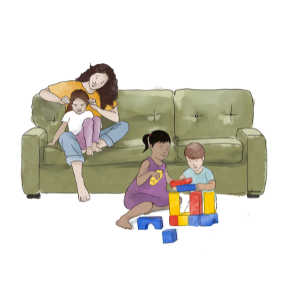



You make the biggest difference in your child’s life. When a child has a delay in development or a disability, it’s easy to talk as if all that matters is the services they receive.
But this isn’t true. What your child needs most is you.
Young children learn most of all through play, connection and the ordinary moments you share together every day. Mealtimes, bath time, shopping, walking to the park and family routines are full of opportunities for learning. Children grow when you slow down, give them time to try things for themselves and respond to their attempts — with your face, your voice and your actions.
Professionals can offer ideas, explore strategies with you. They may work directly with your child to teach them new skills. But none of that replaces the love, care and everyday interactions you provide. You have the most important role.
If you’re wondering what else you can do to support your child’s development, here are some ideas.
Tips for helping your child’s development in daily life
Families spend the most time with their child, and the quality of these everyday interactions makes a real difference. We work in partnership with families to find ways to build rich learning moments into daily routines.
Research suggests that children learn best when you:
- Respond to their initiatives
- Join in with what interests them
- Support what they can already do by giving opportunities to practise and feel successful
- Respond to their attempts at communication, helping them feel like confident communicators (rather than asking test‑style questions or expecting something they cannot yet do)
Small, repeated moments like these create powerful learning opportunities.
You may also find our free ebooks helpful. They offer practical ideas you can use at home:
- Support for developmental concerns – Tips from our team
The strategies and tips from our team in this eBook will help you get things started. They will talk about play activities, toilet training, developing language or movement skills, encouraging positive behaviour and connecting with other families. - Support for developmental concerns – An introduction to early childhood professionals
This eBook, developed by families for families, will introduce you to some professionals and peer workers. They will talk about the area they specialise in. Give examples of proven strategies to try and introduce you to some terms used in the field. - About Play – How children learn through play
Lots of things happen when children have fun. In fact, play is the foundation of how children learn and develop. Developed by Plumtree’s early childhood teachers, About Play is a series on engaging with children during play for positive developmental outcomes. - Telepractice – A family guide and resources
A practical resource for achieving positive outcomes for children and the entire family during the COVID pandemic—and beyond. A collection of videos by parents of children with disabilities, professionals and peer workers provides insights on enhancing communication, literacy, video modelling techniques and other strategies. - School & life – Transition to school guide
This eBook talks about the transition process and provides links to resources that can help you plan a successful start for your child. Topics include getting settled at school, your team’s roles and responsibilities, school options and additional supports available.
Join us at a free activity at Plumtre
As a family‑centred, not‑for‑profit organisation, Plumtree offers a range of free activities for children and families. These sessions provide support, connection and practical ideas you can use at home.
You are welcome to join us at:
- The award‑winning Now & Next program
A peer-led program supporting parents to build a positive vision, set meaningful goals, and create thriving futures for their children and families, at home and at school. - Our full calendar of free events
Plumtree’s workshops and courses share knowledge on nurturing family relationships, making the most of your NDIS plan, toilet training, and more. They are facilitated by members of our therapy team, guest speakers or our trained parent peer workers, who are raising a child with a disability or delay. - MyTime
MyTime is a welcoming space for parents and carers of children with a disability, developmental delay, or concerns about their development. It’s time away from appointments and therapy. A chance to focus on you, with support from other families on similar journeys. - Our free playgroups
Plumtree weekly playgroups facilitated face-to-face during school terms for children of different ages.
Join our online community
Many families say that Plumtree feels like a community. A place where they feel understood, supported and connected. You can connect with our growing online community through:
- Family Stories Project videos and our Plumtree YouTube page
- Our Facebook page, where we share articles and stories about early childhood development
- Our blogs, for ideas and tips and strategies to support your child’s learning
- Our newsletter, with updates about programs, events and useful resources
Take care of yourself
Your wellbeing matters. Your child needs you, and looking after yourself is part of looking after your family. Eating well, getting rest, moving your body, relaxing and doing things you enjoy all make a difference.
If you’re feeling stressed, overwhelmed or low in spirits, please reach out to your doctor or other supports.
You are also welcome at MyTime, where you can meet other parents and carers, share experiences and receive support. Many families tell us how valuable it is to hear from others who understand their journey.
Healthy Mothers Healthy Families is another helpful resource for mothers who want to care for their own wellbeing while supporting their child.
Now & Next is our award‑winning program designed to support positive outcomes for the whole family. If you don’t have NDIS funding, it is currently free for a limited time. Families with NDIS funding can use it to cover the program.