


As a parent, you spend hours watching your beautiful baby, memorising every tiny feature. So, noticing a flat spot developing on the back or side of their head can be worrying. If this is you, please take a breath and know that you are not alone. This condition, known as positional plagiocephaly, is very common in infants, and it’s usually something that can be managed with simple, gentle strategies at home.
This guide will give you clear, practical information to understand why a flat head happens, what you can do to help, and when it might be a good idea to seek professional advice.
Why is this so common?
A baby’s skull is made of soft, bony plates that are very pliable, which allows their brain to grow rapidly in the first few months. Plagiocephaly occurs when constant, prolonged pressure is applied to one part of this soft skull, causing it to flatten.
The main reason this has become more common is the vital “Back to Sleep” campaign from organisations like Red Nose Australia. This life-saving advice has dramatically reduced the risk of SIDS and should always be followed. The unintended consequence is that babies now spend many more hours on their backs, which can lead to flattening.
Sometimes, babies may also have tight neck muscles (a condition called torticollis), which gives them a preference for turning their head to one side and increases pressure on that same spot and requires professional guidance.
The most important thing to know is that in the vast majority of cases, this is a cosmetic condition. It is not painful, and it does not harm your baby’s brain development.
Simple ways to help at home
The reassuring news is that because this condition is caused by pressure, we can manage it by reducing that pressure and encouraging movement. These strategies are simply new ways to play and interact with your baby, building their strength and your bond at the same time.
- Make tummy time a happy time
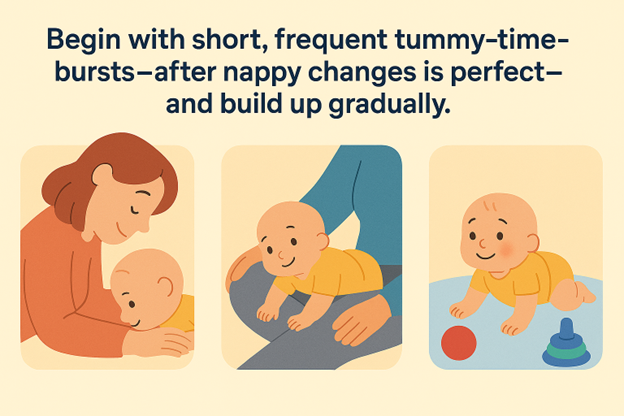
Supervised tummy time is the single most important activity for preventing and managing a flat head. It completely removes pressure from the back of the skull and is essential for strengthening their neck, shoulders, and back muscles. You can start from birth with short, frequent sessions—even one to two minutes at a time after a nappy change—and build up from there.
Read our Making tummy time a happy time: A guide for parents for some more practical ideas on how to make tummy time a happy time.
- Vary their sleep position
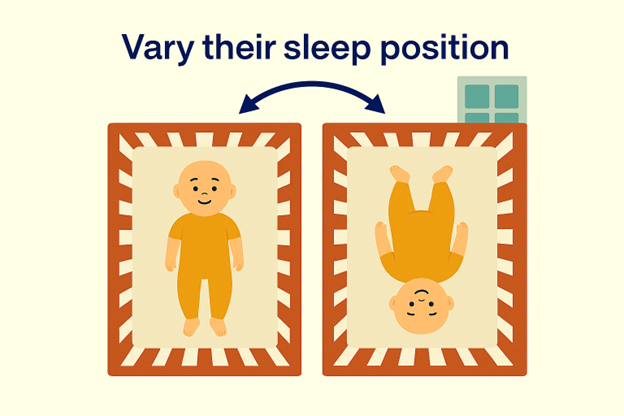
While baby should always sleep on their back, you can vary their head position. Gently turn their head to rest on alternating sides when you place them in the cot. A very effective trick is to change which end of the cot you place their head at each night. Babies naturally turn towards interesting things like a door or window, and this encourages them to actively look in the opposite direction.
- Think beyond the “Container”
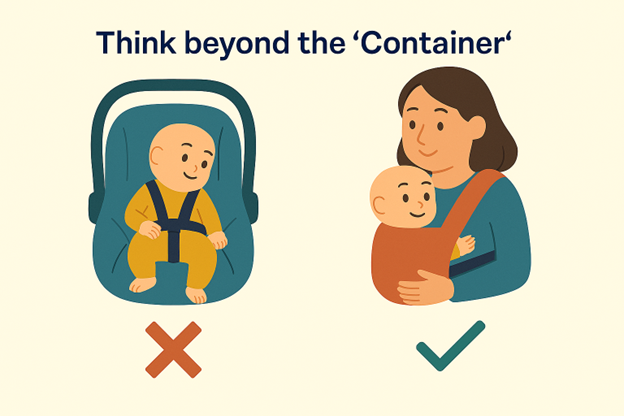
Try to limit the amount of time your baby spends in “containers” like car seats/capsules (when not in a car), bouncers, and prams when they are awake. Instead, enjoy lots of cuddle time by carrying them in your arms or using a baby hip-safe carrier or sling, which keeps them upright and takes all pressure off their head.
- Change the scenery during play
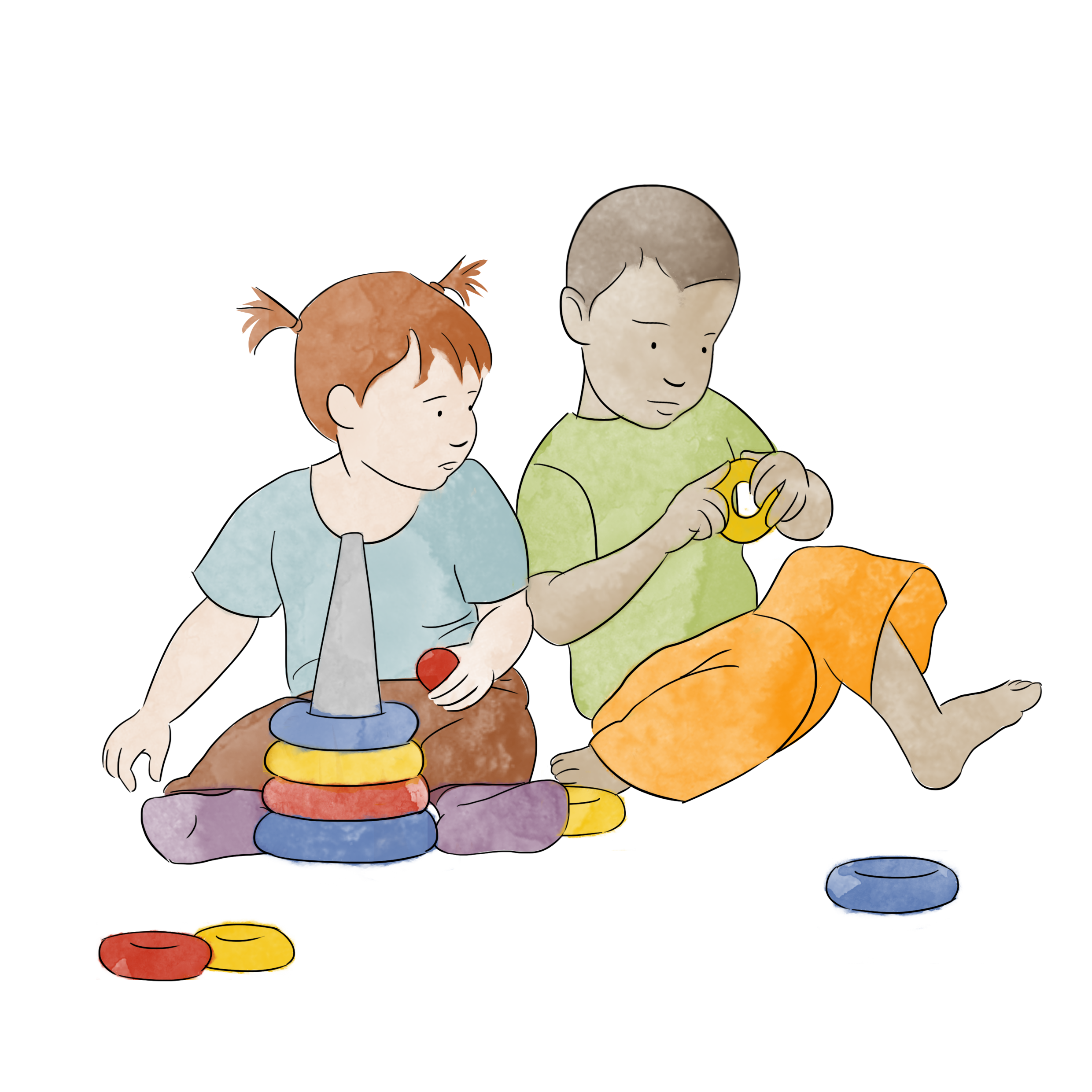
When your baby is on their playmat, position yourself and engaging toys on their non-preferred side. This will encourage them to actively turn their head in the other direction to see you and play.
When to seek further advice
Most cases of flat head are mild and improve significantly with the simple strategies above. However, it’s a good idea to chat with a professional if:
- You have been trying these tips consistently for a few weeks and are not seeing any improvement.
- Your baby seems to only turn their head to one side or always holds it in a tilted position.
- You notice that their ears, eyes, or forehead seem uneven.
- You are simply feeling worried and would like reassurance.
In Australia, the best first step is always to speak with your Child and Family Health Nurse or GP. They can assess your baby and, if needed, refer you to a paediatric physiotherapist. Physiotherapy is the recommended first-line treatment for babies with an established flat spot, especially if there is any neck tightness involved.
Remember, you are the expert on your child. Noticing this early and seeking information shows what a wonderful and attentive parent you are.
Explore more resources to support your journey
If you are looking for more fun ideas for floor play and want to connect with other families, we invite you to learn more about our supported playgroups.
Learn more and contact us about paediatric physiotherapy for your child.
✍️ Written by Hesham, physiotherapist at Plumtree