




One of the aims of good early childhood support is that, over time, your child can take part more fully in everyday life, and you feel confident supporting them in the moments that matter.
Many families begin therapy because their child, or their family, needs some extra support at that point in time. This support can be really helpful, giving children new opportunities to learn and helping families feel more confident. What is less often talked about is that, as children grow and circumstances change, what is needed can change too.
Therapists are not meant to be in your child’s life forever. Their role is to work alongside you so that your child can grow, learn, and participate at home, in early learning, at school, and in the community.
When you find yourself needing less support, that’s often a sign that things are working and that your child is moving forward.
Why this can feel hard
Therapists can become an important part of your child’s life. They may understand your child well, and you may have built trust over time.
So stepping away can feel uncertain. You might wonder what comes next, or whether it’s the right time.
These are important things to think through carefully.
What good support is aiming for
The National Best Practice Framework for Early Childhood Intervention (2025) highlights that children learn and develop through everyday experiences, relationships, and the environments around them.
This means:
- children learn through daily routines, play, and time with people they know
- support should fit into your family’s life, not sit outside it
- therapy should make it easier for your child to participate in everyday activities
- the focus is on helping children do well in real-life settings
- Support works best when it strengthens what is already happening around your child.
Support works best when it strengthens what is already happening around your child.
Why needs can change over time
As children grow, their routines, environments, and supports change.
What worked at one stage may not be the right fit later on.
For example:
- your child may be more settled in childcare or school
- your family routines may have changed
- your child may be learning more through everyday activities than in sessions
As children grow, they also show us more about what they enjoy, what they avoid, and how they like to learn. Paying attention to your child’s cues and preferences can help guide decisions about what support feels right for them. This is a normal part of development and often a sign that new opportunities are opening up.
Signs it might be time to rethink things
You don’t need a big reason to make a change. Sometimes it’s simply noticing that things feel different.
You might notice:
- sessions don’t feel as useful as they once did
- it’s unclear how to use ideas from sessions in daily life
- your child is doing better in everyday situations
- you’re looking for a different type of support
These are all good reasons to pause and reflect.
Before you “break up”: start with a conversation
Before making a decision, it can help to talk things through.
You could:
- share with your therapist what is and isn’t working
- ask how support could better fit into your daily routines
- speak with the organisation about different options
Sometimes small changes, like where sessions happen or what you focus on, can make support feel more relevant again.
Sometimes it’s not about stopping support, but finding a better fit. Not every therapist or key worker will be the right match for every child or family, and that’s okay. If something doesn’t feel quite right, talking with your provider can help explore other options.
Helpful guides for working with professionals
Parents in your community have developed clear guidance about what good partnerships should feel like. You might find it helpful to look at:
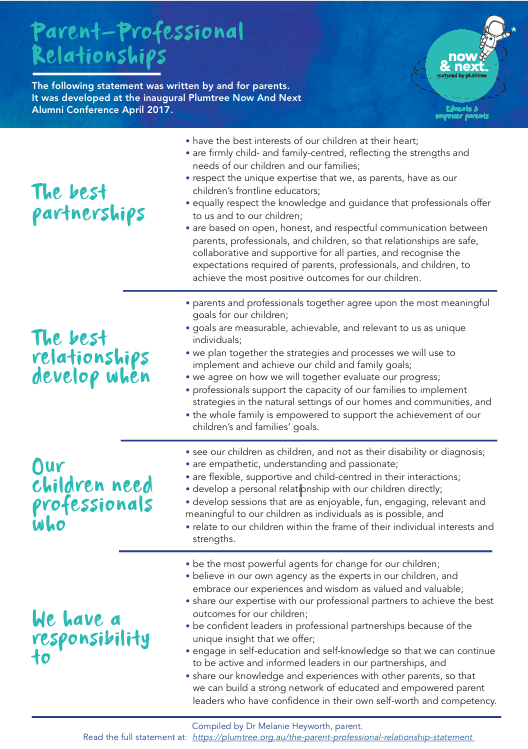
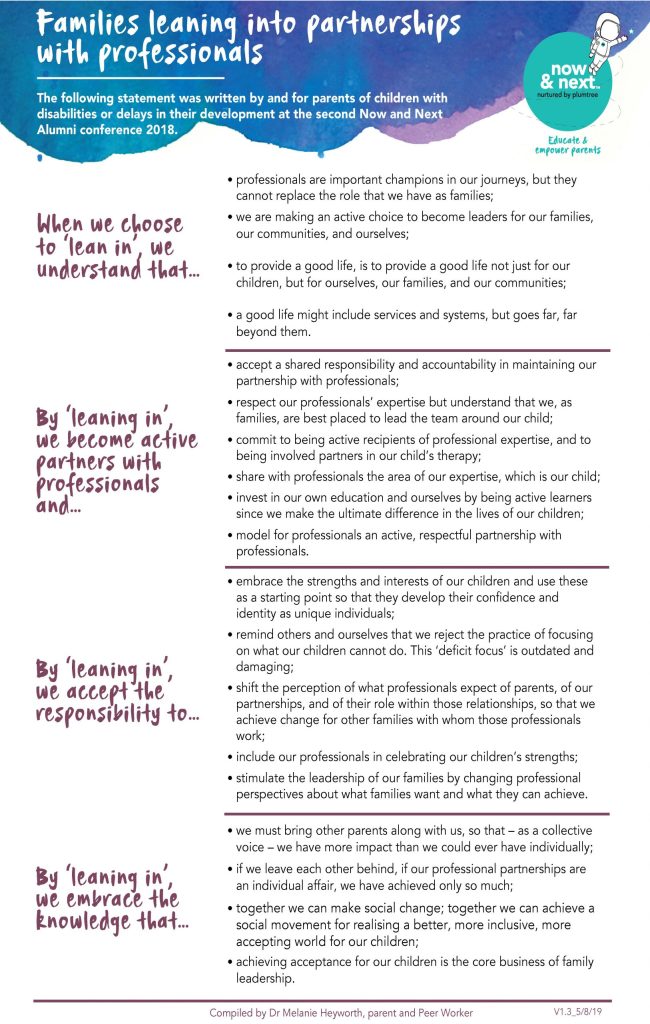
These can help you think about what matters most to you and your child.
Taking a moment to notice what you’re already seeing and doing with your child can help guide your next steps.
“Sometimes we rely on professionals so much that we forget how well we know our own child.” — Parent of a 3-year-old
If you do decide to move on
It’s okay to make a change when your child’s needs change.
Good therapists understand this. Their role is to support your child’s development, including recognising when a different approach, or less support, is the right next step.
You don’t have to stop all at once.
You might:
- space out appointments
- move to occasional check-ins
- focus more on planning and guidance
- take a break and see how things go
A different way to think about support
The goal isn’t to build life around therapy.
The goal is to support your child in real life.
That means:
- learning happens during meals, playtime, outings, and daily routines
- the people around your child play the biggest role
- support should fit into your life and strengthen what’s already working
One final thought
You are allowed to change direction as your child grows.
You are allowed to choose what works best for your child and your family right now.
And sometimes, stepping back from therapy is about recognising your child’s progress, and making space for the next stage of their development.
✍️ Written by Sylvana, Plumtree CEO
Want to learn more?
If you’d like to explore this further, you might find these helpful:


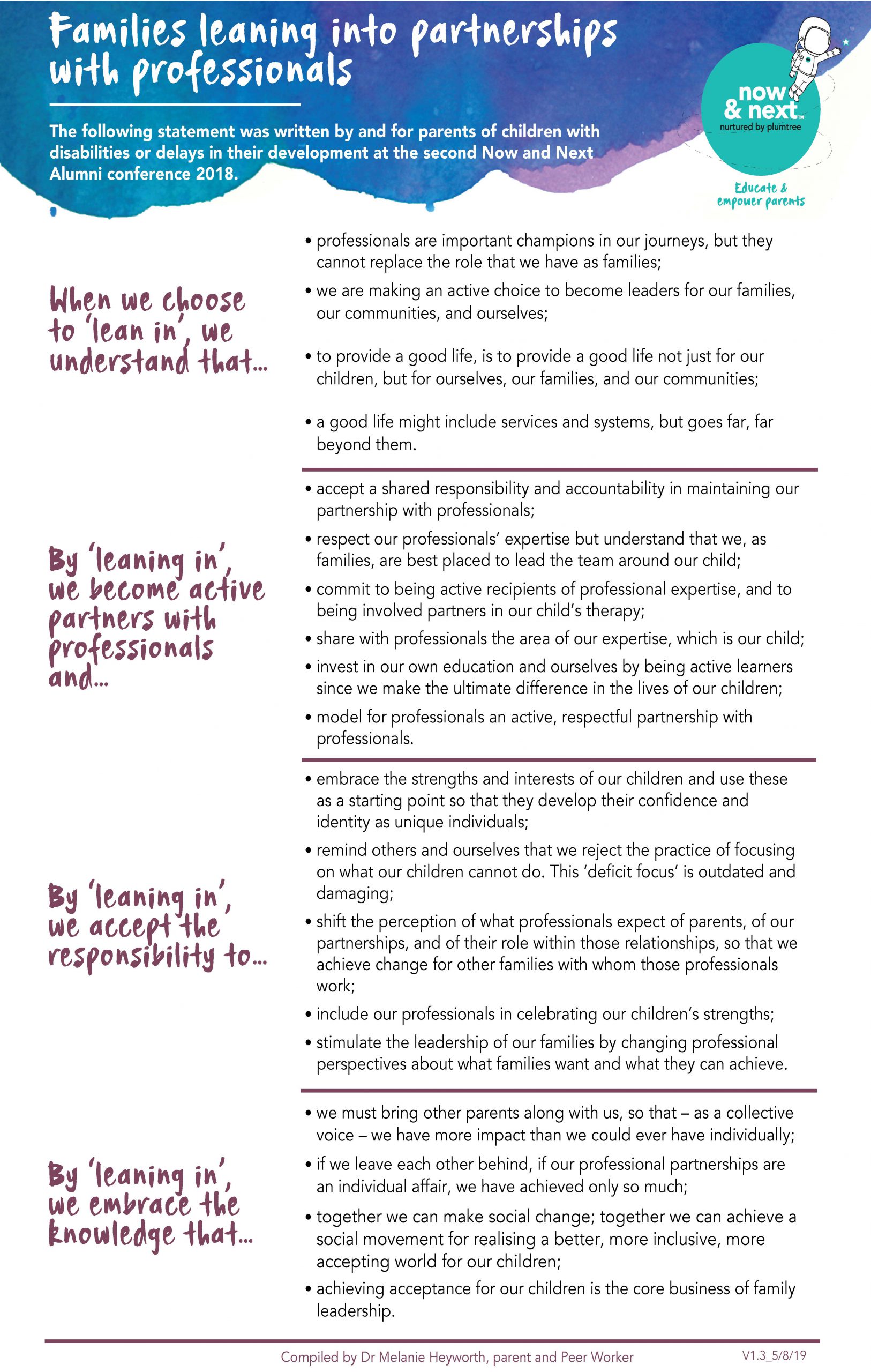
✍️ Written by Sylvana, Plumtree CEO